AI in IoT
ARTIFICIAL INTELLIGENCE IN IoT
VARAD PINGLE - 31
SHARVIT SHEVADE -52
SIDDHESH SHIRSATH - 55
PRATHMESH TALEKAR - 58
Introducing IoT & AI
Artificial intelligence helps machines to behave like humans such as face recognition, decision making, learning and solving problems. Artificial Intelligence are used for learning and making self-decisions by using the process of complex organized or unorganized data. This technology has given a new horizon to the digital world like the way smartphones made a change in our lives. Every day, we get to hear about new upgrades and new technologies bringing rapid change in the globe. With every change, the tech world is also growing resulting in advanced technology which is bringing us closer. Such an example is the development & advancement of IoT or internet of things. Here artificial experience plays the role to speed up user experience. Before getting into the technical skills of IoT, lets understand what is it and where is it required?
AI and IoT: Why Do We Need It?
According to a report, companies like Deloitte have already using AI and IOT for establishing themselves in the market in 2017. So why is it so important?
Actually artificial intelligence has become a perfect solution to manage multiple connected IoT elements, its unlimited processing and learning abilities. These are considered to be quite useful for making sense of millions of data transmitted by IoT devices.
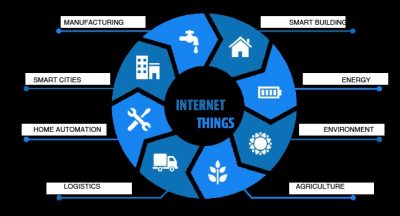
How IoT Benefits From AI?
Soon, IoT would produce vast amount of data due to the rapid growing of devices and sensors. According to a research, 50 billion devices will be connected to the internet by 2020, ranging from smartphones, gadgets, smart watches, various computer systems and vehicles. These data would be a lot helpful for various things such as predicting natural calamities, accidents and crimes, helps doctors getting real-time information from medical equipment, optimized productivity across industries, predictive maintenance on equipment and machinery, create smart homes with connected appliances and provide critical communication between self-driving cars. The possibilities are endless. These big data are important only when it is transformed into valuable and actionable information within a given time period. Obviously it is not possible for human hands to do it. This is where artificial intelligence comes into play. AI collects the data and extracts the meaning from it by applying analytics. When we feed data from IoT devices into an AI system, it reviews and analyzes the data, produces decisions made either by machines or humans.
Examples of IoT applications.
Smart decisions. When a device detects unusual conditions due to any error, it needs to know how to and when to react or whether it need human assistance. Obviously intelligent learning and decision-making capabilities are required to make such wise decisions. Google uses this approach in the Rank Brain algorithm. Once the solution is made, it responds in real-time without any human intervention.
Smart Meters. Smart meters use specially designed sensors, incorporated into smart grids to record and upload electrical and background data. Here Artificial Intelligence techniques are applied to the grid to integrate privacy. They are used in every electricity consumption unit. Not only does they have the bidirectional flow of both electricity, they are equipped with real-time sensors which collects data on relevant factors that includes frequencies used by different equipment and appliances.
Boosting efficiency. Machine learning with AI can decipher trends and make predictions about future events, by applying predictive analytics. This shows the real benefits of IoT in a variety of manufacturing industries.
Healthcare. In the healthcare sector, AI with IoT can improve patient care. Sensors from medical devices such as healthcare mobile apps, fitness trackers and digital medical records have been producing and storing patient’s data. The AI and IoT approach can help predict diseases, suggest preventive maintenance, track physical activity, heart rate, body mass, temperature and provide drug administration by reviewing the medical history and identifying the health problem. When it is regarding health protection or disease control, patients and doctors would accept the benefits that come with the AI and IoT approach.
Forecasting. Accurate forecasts help farmers to plan farming or harvesting. Train or plane schedules fully depends on weather forecasting to modify for expected weather interruptions. Businesses that are weather dependent, such as landscaping or utility companies can accurately employ labor and resources according to expected weather events.
AI can help make more accurate forecasting. Artificial intelligence (AI) techniques apply its method on past predictions and actual outcomes. By comparing predictions with outcomes, it produces results for the future, with greater accuracy. AI feed both old and currently available data into algorithms that effective at past occurrences with future predictions.
Scalability. IoT can scale data. It means:
- AI extracts information from one device.
- Analyses and summarizes the data.
- Transfer it to the other.
Thus it reduces the enormous amount of data to a lesser amount and enables a larger number of IoT devices to be connected to the network. This is called scalability.
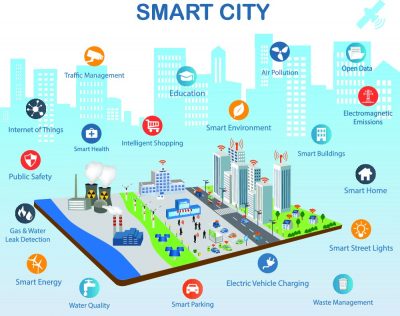
Smart Devices: Today we have basic things fitted with technology like smart TV, smart watch, smart security system. Even we have “intelligent” vacuum cleaners, doorbells and lightning systems which have already come to the market. All this is due to artificial intelligence and it do makes life easier.
AI can make life in smart homes even more comfortable. It can detect your mood and analyze your interaction with home objects such as
- Adjusting temperature for both heating and cooling.
- Adjusting lighting.
- Put on music of your choice.
- Close or open windows depending on the weather.
Today’s business world is changing with the adoption of IoT (Internet of Things). IoT is helping in prominently capturing a tremendous amount of data from multiple sources. However, wrapping around the multitude of data coming from countless of IoT devices, makes it complex to collect, process, and analyze the data.
Realizing the future and full potential of IoT devices will require an investment in new technologies. The convergence of AI (Artificial Intelligence) and IoT can redefine the way industries, business, and economies functions. AI enabled IoT creates intelligent machines that simulate smart behavior and supports in decision making with little or no human interference.
Combining these two streams benefits the common person and specialists alike. While IoT deals with devices interacting using the internet, AI makes the devices learn from their data and experience. This blog highlights why we need IoT and AI to work together.
Increasing Popularity of IoT and AI
Several businesses have already adopted AI and IoT as part of their processes and products. A recent Tech Trend survey by SADA System states that IoT and AI are the popular technologies currently in use today. It also found that the AI and IoT are the top technologies companies are investing in most to increase efficiency and provide a competitive advantage. The graph below depicts the details: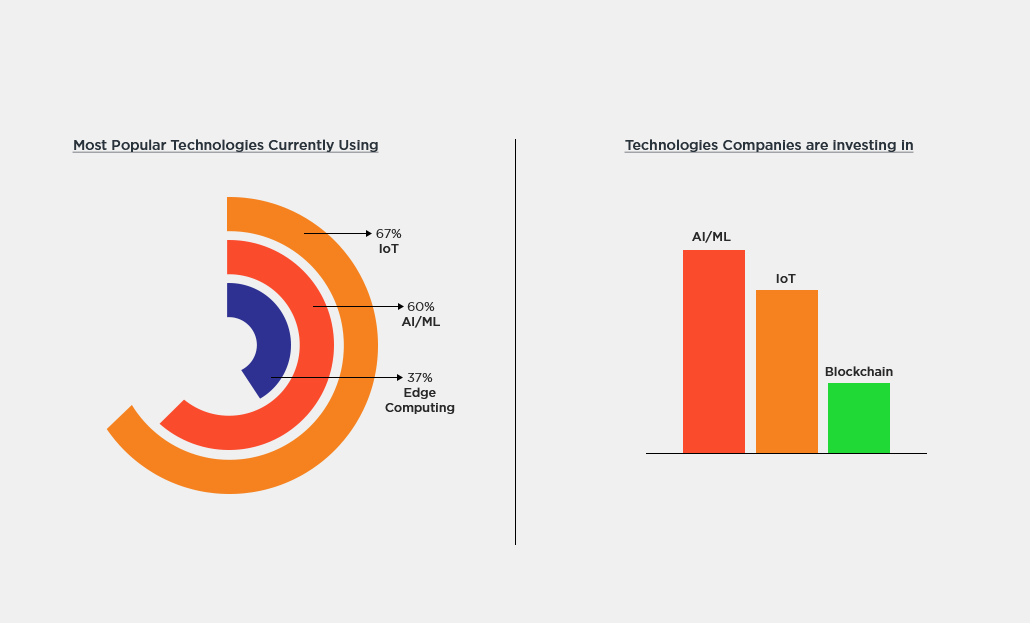
According to the IBM Global C-suite Study program, C-suite executives begin to reinvent their business by digitizing interactions and communications. IBM Institute interviewed a group of C-suite executives and found that 19% of respondents (grouped as high performers called Reinventors) are keenly focused on the benefits of augmented IoT with AI. The following graph illustrates the response of the interview: 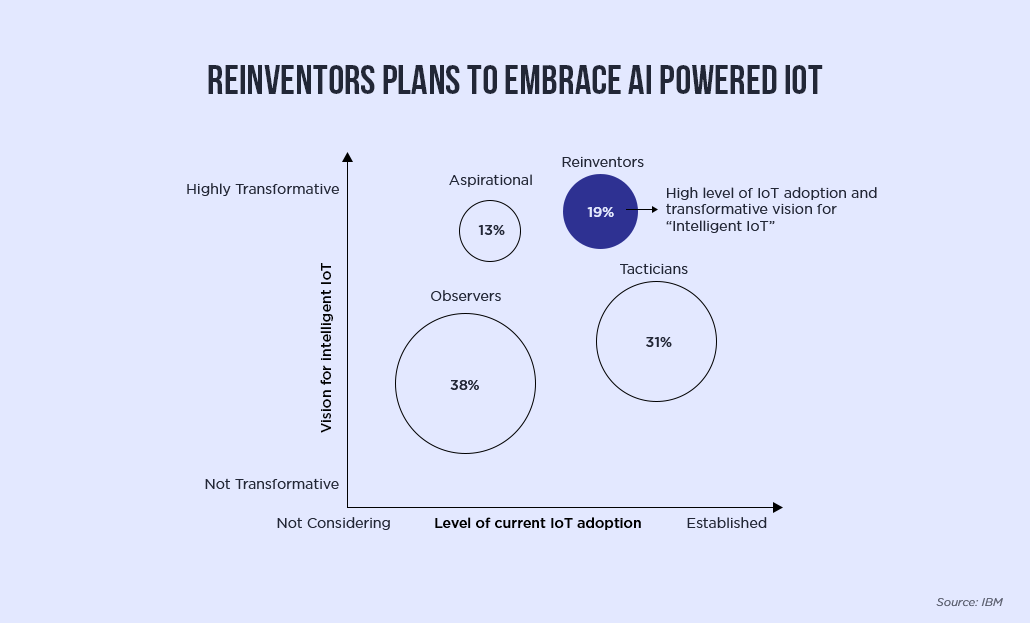
Both startups and large companies prefer AI technology for unleashing the full potential of IoT. The leading vendors of IoT platform like Oracle, Microsoft, Amazon, and Salesforces have started consolidating AI capabilities into their IoT applications.
Where does AI unlock IoT?
At its core, IoT is about sensors implanted into machines, which offer streams of data through internet connectivity. All IoT related services inevitably follow five basic steps called create, communicate, aggregate, analyze, and act. Undeniably, the value of the “Act” depends on the penultimate analysis. Hence, the precise value of IoT is determined at its analysis step. This is where the AI technology portrays a crucial role.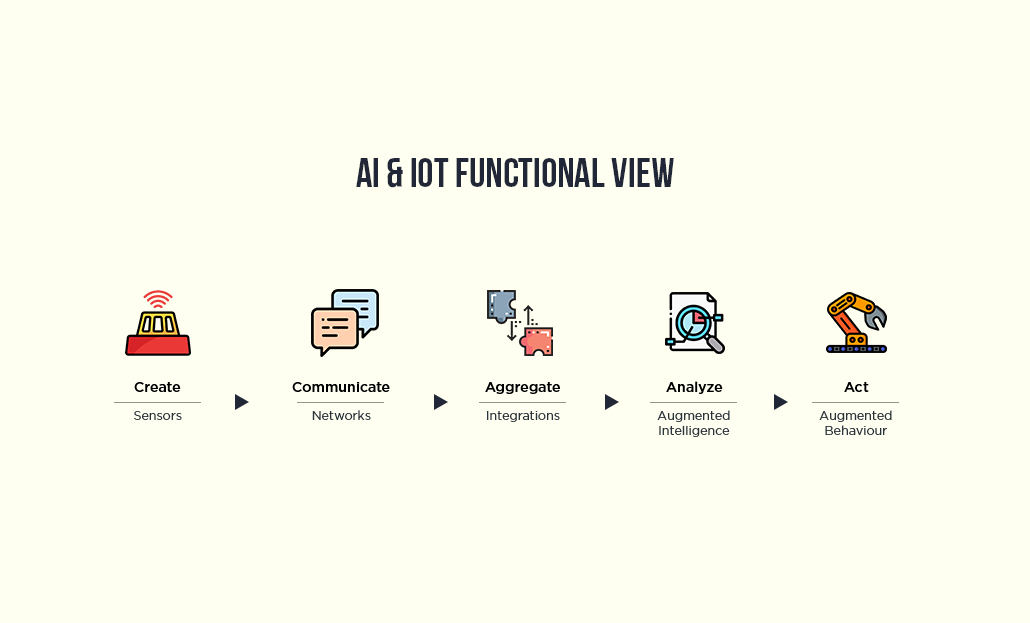
While IoT provides data, artificial intelligence acquires the power to unlock responses, offering both creativity and context to drive smart actions. As the data delivered from the sensor can be analyzed with AI, businesses can make informed decisions. The artificial intelligence IoT succeeds in achieving the following agile solutions:
- Manage, analyze and obtain meaningful insights from data
- Ensure fast and accurate analysis
- Balance requirements for localized and centralized intelligence
- Balance personalization with confidentiality and data privacy
- Maintain security against cyber attack
Benefits of AI Enabled IoT
IoT artificial intelligence leads to a broad range of benefits for companies and consumers like a proactive intervention, personalized experience, and intelligent automation. Here are some of the most popular benefits of combining these two disruptive technologies to the businesses:
1. Boosting Operational Efficiency
AI in IoT crunches the constant streams of data and detects the patterns not deceptive on simple gauges. In addition, machine learning coupled with AI can predict the operation conditions and detect the parameters to be modified to ensure ideal outcomes. Hence, intelligent IoT offers an insight into which processes are redundant and time-consuming, and which tasks can be fine-tuned to enhance efficiency.
Google, for example, brings the power of artificial intelligence into IoT to reduce its data center cooling costs.
2. Better Risks Management
Pairing AI with IoT helps businesses to understand as well as predict a broad range of risks and automate for the prompt response. Thereby, it allows them to better handle financial loss, employee safety, and cyber threats.
Fujitsu, for example, ensures worker safety by engaging AI for analyzing data sourced from connected wearable devices.
3. Triggering New and Enhanced Products & Services
NLP (Natural Language Processing) is getting better at allowing people to communicate with devices. Undeniably, IoT and AI together can directly create new products or enhance existing products & services by enabling the business to rapidly process & analyze the data.
Rolls Royce, for example, plans to leverage AI technologies in the implementation of IoT-enabled airplane engine maintenance amenities. Indeed, this approach will support to spot patterns and discover operational insights.
4. Increase IoT Scalability
IoT devices range from mobile devices and high-end computers to low-end sensors. However, the most common IoT ecosystem includes low-end sensors, which offers floods of data. AI-powered IoT ecosystem analyzes and summarizes the data from one device before transferring it to other devices. As such, it reduces large volumes of data to a handy level and allows connecting a large number of IoT devices. This is called scalability.
5. Eliminates Costly Unplanned Downtime
In some sectors like offshore oil & gas and industrial manufacturing, equipment breakdown can result in costly unplanned downtime. The predictive maintenance with AI enabled IoT allows you to predict the equipment failure in advance and schedule orderly maintenance procedures. Hence, you can avoid the side effects of downtime.
Deloitte, for example, finds the following results with AI and IoT:
- 20% - 50% reductions in their time invested in maintenance planning
- 10% - 20% increase in equipment availability and uptime
- 5% - 10% reduction in maintenance costs
Examples of AI and IoT in Action
Let us have a closer look at businesses that have achieved better user experience and designed new business models with AI-powered IoT.
1. Robots in Manufacturing
Manufacturing is one of the industries that already embraced new technologies like IoT, artificial intelligence, facial recognition, deep learning, robots and many more. Robots employed in factories are turning smarter with the support of implanted sensors, which facilitates data transmission. Moreover, as the robots are provisioned with artificial intelligence algorithms, they can learn from newer data. This approach not only saves time and cost but also makes the manufacturing process better over time.
2. Self-driving Cars
Tesla’s self-driving cars are the best example of IoT and AI working together. With the power of AI, self-driving cars predict the behavior of pedestrians and cards in various circumstances. For example, they can determine road conditions, optimal speed, weather and getting smarter with each trip.
3. Retail Analytics
Retail analytics involves numerous data points from cameras and sensors to observe customers’ movement and to predict when they will reach the checkout line. Thereby, the system can suggest dynamic staffing levels to reduce the checkout time and increases the productivity of the cashiers.
4. Smart Thermostat Solution
Nest’s smart thermostat solution is a good example of AI-powered IoT. The smartphone integration can check and manage the temperature from anywhere based on the work schedule and temperature preferences of its users.
Overall, IoT coupled with AI technology can lead the way to the advanced level of solutions and experience. To obtain better value from your network and transform your business, you should integrate AI with incoming data from the IoT devices.
The IoT and Artificial Intelligence (AI) will play a vital role in the future as it has become a growing need for technologies in both private and government sectors. Engineers, scientists and technologists have already started to implement it in various levels. The potential opportunities and benefits of both AI and IoT can be gained once they are combined, both at the devices end as well as at the server.
very useful and informative blog. Keep it up .
ReplyDeleteFound very useful, good work
ReplyDelete